

Equations with two variables can be solved when we have at least two different equations involving those variables. This is because having two equations allows us to find the values of both variables.
There are two common methods to solve such systems: substitution and elimination (also called opposite factors).
In the substitution method, we solve one equation for one variable and then substitute that expression into the other equation. For example, consider the system:
1) y = 2x + 3
2) 3x + y = 9
From equation (1), y is already expressed as y = 2x + 3. Substitute this into equation (2):
3x + (2x + 3) = 9
Combine like terms:
5x + 3 = 9
Subtract 3 from both sides:
5x = 6
Divide by 5:
x = 6/5
Now substitute x back into equation (1):
y = 2(6/5) + 3 = 12/5 + 3 = 12/5 + 15/5 = 27/5
So the solution is x = 6/5, y = 27/5.
In the elimination method, we multiply the equations by suitable numbers so that adding or subtracting them eliminates one variable. For example, consider:
1) 2x + 3y = 12
2) 4x – 3y = 6
Add the two equations:
(2x + 4x) + (3y – 3y) = 12 + 6
6x + 0 = 18
6x = 18
x = 3
Now substitute x = 3 into equation (1):
2(3) + 3y = 12
6 + 3y = 12
3y = 6
y = 2
So the solution is x = 3, y = 2.
These methods provide systematic ways to solve systems of equations with two variables.
ELIMINATION
SUBSTRACION
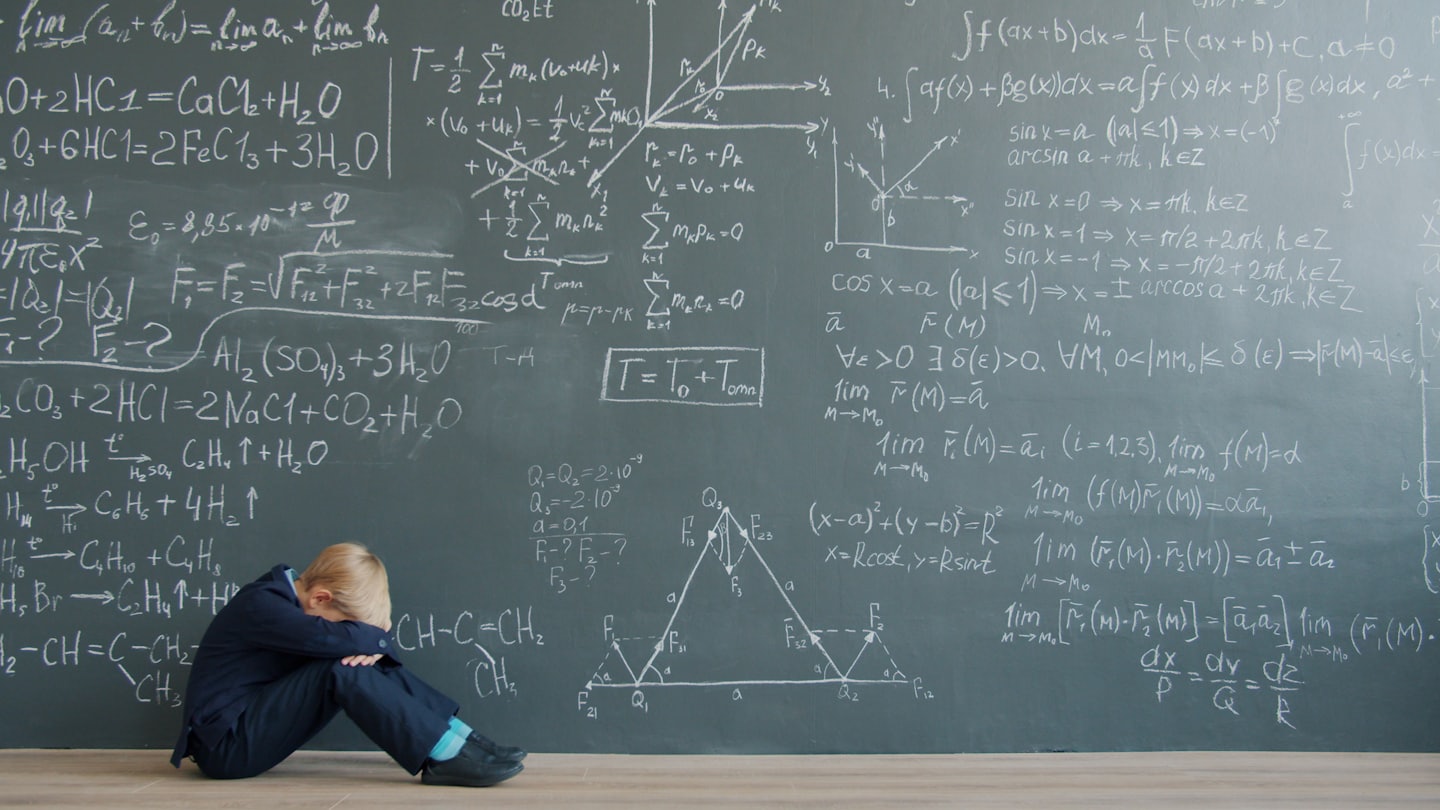
Pupils are often confused when they encounter two equations because they may not immediately understand how the equations relate to each other or how to approach solving them together. This confusion can stem from unfamiliarity with methods such as substitution or elimination. However, once students learn these techniques, they realize that solving such problems becomes manageable and straightforward.
By breaking down the process step-by-step, pupils can see that every variable can be calculated systematically. With practice, what initially seems complex transforms into a clear and logical task, boosting confidence and problem-solving skills.
Even an equation with three variables can be solved, but to find a unique solution for all variables, we need three different equations. This is because each equation represents a relationship between the variables, and having three distinct equations allows us to determine the exact values of all three variables. Without enough equations, the system remains unsolved or has infinitely many solutions. This concept highlights the importance of having sufficient information to solve complex problems accurately.
CONCLUSION
Just like any math problem, once you understand the method, you can solve any math challenge, including systems of equations with two variables. Mastering these techniques builds confidence and problem-solving skills that apply to many areas. Keep practicing, and you’ll find that no problem is too difficult to tackle. Remember, the key is knowing the process—this empowers you to solve equations efficiently and accurately every time.
Leave a Reply